

Master Personal Development Planning for Business Growth
Setting personal development goals sounds straightforward. But most people never reach them, even though studies show that writing down your goals can double your chances of success. Still, the real secret isn’t just about writing goals but building a system that constantly adapts as you grow. That’s what changes everything.
Table of Contents
- Step 1: Define Your Personal Development Goals
- Step 2: Assess Your Current Skills and Abilities
- Step 3: Create An Action Plan With Milestones
- Step 4: Implement Your Action Plan Consistently
- Step 5: Review And Adjust Your Development Plan Regularly
Quick Summary
| Key Point | Explanation |
|---|---|
| 1. Define SMART Development Goals | Use Specific, Measurable, Achievable, Relevant, and Time-bound criteria to create effective personal growth objectives. |
| 2. Conduct Honest Skill Assessments | Regularly assess your strengths and weaknesses to inform targeted professional development strategies. |
| 3. Create a Structured Action Plan | Develop a clear, detailed plan with milestones that breaks down each goal into manageable tasks and timelines. |
| 4. Implement Goals Consistently | Dedicate time for skill development as a priority, treating it with the same importance as other professional responsibilities. |
| 5. Review and Adjust Regularly | Schedule periodic evaluations of your progress to make informed adjustments that keep your development plan aligned with your goals. |
Step 1: Define Your Personal Development Goals
Defining your personal development goals is the strategic foundation that transforms professional aspirations into actionable blueprints for business growth. This critical step requires deep introspection and systematic planning to create meaningful, targeted objectives that align with both your individual capabilities and your agency’s broader vision.
Begin by conducting a comprehensive self assessment that examines your current skill landscape, professional strengths, and potential areas for improvement. Honest evaluation is key. Consider your leadership capabilities, technical expertise, communication skills, and strategic thinking abilities. Reflect on past performance reviews, client feedback, and moments where you felt challenged or limited in your professional capacity.
When crafting your personal development goals, focus on creating SMART objectives – Specific, Measurable, Achievable, Relevant, and Time-bound. Instead of vague statements like “improve leadership skills,” design precise goals such as “Complete an advanced project management certification within six months” or “Develop and implement a client communication framework that reduces project miscommunication by 40% in the next quarter”.
Your personal development goals should strategically bridge the gap between your current professional state and your desired future trajectory. Learn more about strategic leadership development to refine your approach and ensure your objectives are both challenging and realistic.
As you define these goals, consider multiple dimensions of professional growth:
- Technical skill enhancement
- Leadership and management capabilities
- Strategic thinking and business development
- Personal productivity and efficiency
- Emotional intelligence and interpersonal skills
Document your goals in a structured format that allows for regular review and adjustment. Use a dedicated digital tool or journal where you can track progress, record insights, and maintain accountability. The act of writing down your goals increases commitment and provides a tangible roadmap for your personal development journey.
Successful goal definition is not a one time event but an ongoing process of reflection, adjustment, and recommitment. Regularly revisit and recalibrate your objectives to ensure they remain aligned with your evolving professional landscape and business needs.
Here is a checklist table to help you systematically track the key activities and verification steps necessary for strong personal development planning.
| Step | Checklist Item | Verification Criteria |
|---|---|---|
| 1 | Conduct self-assessment | Completed reflection on strengths, weaknesses, and review of performance feedback |
| 2 | Set SMART goals | Goals are Specific, Measurable, Achievable, Relevant, and Time-bound |
| 3 | Document goals | All objectives are written in a dedicated tool or journal |
| 4 | Assess current skills | Created an inventory of skills with supporting real-world examples |
| 5 | Create an action plan | Action plan includes clear milestones, deadlines, and task breakdowns |
| 6 | Allocate time for development | Dedicated regular time blocks on your calendar for learning and practice |
| 7 | Review and adjust goals | Scheduled recurring sessions for plan review and updates |
Step 2: Assess Your Current Skills and Abilities
After defining your personal development goals, the next critical phase in personal development planning is conducting a thorough and honest assessment of your current skills and abilities. This diagnostic step transforms abstract aspirations into tangible growth strategies by providing a clear understanding of your professional strengths and potential development areas.
Self-assessment requires vulnerability and objectivity. Begin by creating a comprehensive skills inventory that covers multiple professional dimensions. This isn’t about self criticism but strategic self understanding. Review your technical capabilities, leadership competencies, communication skills, strategic thinking, and emotional intelligence. Consider collecting insights from multiple perspectives to ensure a holistic evaluation.
Implement a structured approach to skill assessment by utilizing various diagnostic tools and feedback mechanisms. Professional skills assessments, 360-degree feedback surveys, and performance reviews offer valuable external perspectives. Explore leadership skill development frameworks to understand comprehensive evaluation techniques.
Critical elements to evaluate in your skill assessment include:
- Technical proficiency in your core business domain
- Leadership and management capabilities
- Strategic problem solving abilities
- Communication and interpersonal skills
- Adaptability and learning agility
- Emotional intelligence
During your assessment, document specific examples that demonstrate your current skill levels. Record concrete scenarios where you successfully applied skills or encountered challenges. This documentation creates a baseline for tracking future growth and provides context for your personal development journey.
Technology can significantly enhance your skills assessment. Utilize digital tools like skills tracking platforms, online assessment instruments, and professional development apps that provide structured frameworks for evaluation. These technologies offer objective metrics and help visualize your skill progression over time.
Be prepared to confront potential skill gaps with curiosity rather than judgment. Each identified limitation represents an opportunity for targeted professional development. Approach your assessment as a strategic roadmap, transforming potential weaknesses into deliberate areas of focused improvement. The most successful professionals view skill assessment not as a critique but as a valuable navigational tool for continuous professional growth.
This table summarizes the recommended tools and resources mentioned throughout the article to support your personal development journey.
| Tool/Resource | Purpose | Example Usage |
|---|---|---|
| Digital journals/apps | Document and track goals | Record SMART objectives, reflect on progress |
| 360-degree feedback surveys | Gather multi-source feedback | Assess leadership and communication skills |
| Online skills assessments | Evaluate competencies | Baseline assessment for technical or soft skills |
| Project management platforms | Track action plan and milestones | Manage tasks and deadlines for development goals |
| Productivity apps | Ensure regular implementation | Set reminders for learning sessions |
| Professional workshops/courses | Build targeted skills | Attend online courses for leadership or business development |
| Mentorship programs | Gain guidance and accountability | Partner with a mentor for support and insights |
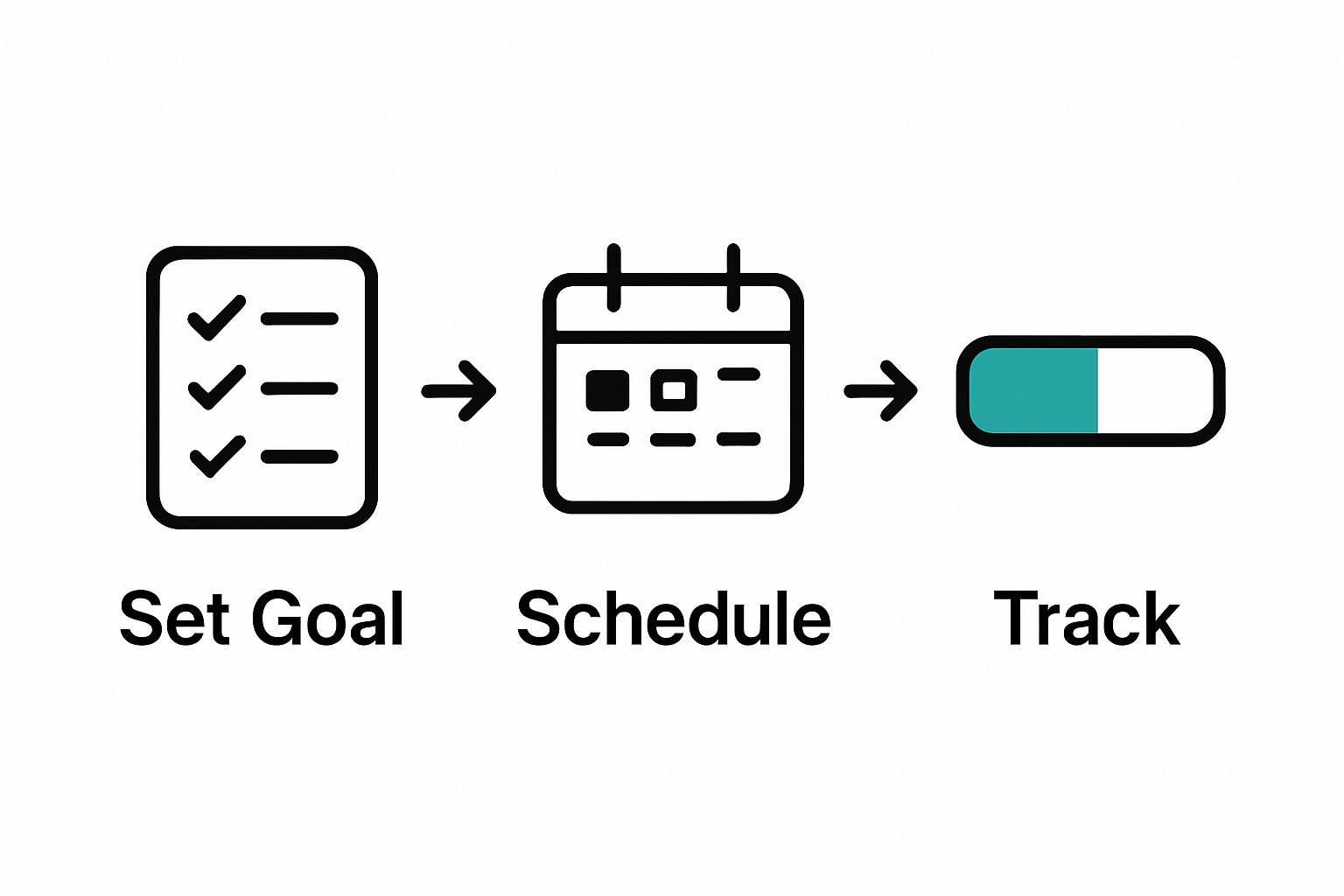
Step 3: Create an Action Plan with Milestones
Transforming your personal development goals into reality requires a structured action plan with clear, measurable milestones. This critical step bridges the gap between aspiration and achievement, providing a strategic roadmap that transforms abstract objectives into concrete progress. An effective action plan serves as your professional navigation system, guiding you through skill development with precision and accountability.
Begin by breaking down each identified development goal into specific, actionable components. Each goal should be dissected into smaller, manageable tasks that create a logical progression towards mastery. Consider the resources, time, and potential challenges associated with each milestone. Realistic planning prevents overwhelm and maintains motivation.
Learn strategic approaches to maximizing leadership productivity to enhance your planning effectiveness. Your action plan should incorporate both short-term quick wins and long-term transformative objectives, creating a balanced approach to professional growth.
Design your milestones with clear characteristics:
- Specific and precisely defined outcomes
- Measurable progress indicators
- Realistic timeframes
- Aligned with broader professional objectives
- Flexible enough to accommodate unexpected challenges
Implement a tracking mechanism that allows for regular progress evaluation. Digital tools like project management platforms, skills tracking apps, or customized spreadsheets can help monitor your development journey. Schedule periodic review sessions every 30 to 90 days to assess progress, recalibrate strategies, and maintain momentum.
Consider potential obstacles that might impede your progress and preemptively develop contingency strategies. Professional development rarely follows a perfectly linear path. Build adaptability into your action plan by creating alternative approaches and maintaining a growth mindset that views challenges as opportunities for learning and refinement.
Your action plan should also incorporate skill-building resources such as online courses, professional workshops, mentorship programs, and targeted reading materials. Allocate specific time blocks for learning and practice, treating these development activities with the same priority as client work or critical business responsibilities.
Successful milestone creation transforms personal development from a passive wish into an active, intentional process.
By crafting a detailed, dynamic action plan, you convert your professional growth strategy from a static document into a living, breathing roadmap of continuous improvement.
Step 4: Implement Your Action Plan Consistently
Implementing your personal development action plan demands more than strategic design it requires unwavering commitment and disciplined execution. Consistency transforms theoretical goals into tangible professional growth, turning potential into performance through persistent, intentional effort.
Establish a structured routine that embeds your development activities into your daily professional workflow. This isn’t about radical transformation but incremental, sustainable progress. Dedicate specific time blocks for skill development, treating these commitments with the same priority as client meetings or critical business tasks. Small, regular investments compound dramatically over time.
Discover advanced productivity strategies for leaders to support your consistent implementation approach. Create accountability mechanisms that help you maintain momentum, even when motivation naturally fluctuates.
Critical implementation strategies include:
- Creating non-negotiable daily or weekly learning windows
- Setting specific triggers that prompt skill development activities
- Using technology to track and reinforce progress
- Developing backup plans for potential disruption
- Celebrating incremental achievements
Recognize that implementation isn’t about perfection but persistent progress. Some days will feel more productive than others, and that’s acceptable. Build resilience by viewing setbacks as learning opportunities rather than failures. When obstacles emerge, quickly recalibrate and recommit to your development path.
Utilize technology and digital tools strategically to support consistent implementation. Productivity apps, reminder systems, and progress tracking platforms can provide structure and motivation. Set up automated notifications, progress logs, and periodic self check-ins that keep your development journey front and center in your professional consciousness.
Develop a support ecosystem that reinforces your implementation efforts. This might include finding an accountability partner, joining professional development groups, or working with a mentor who can provide guidance and motivation. External perspectives can offer critical insights and help maintain your commitment during challenging periods.
Remember that consistent implementation is a skill itself. Like any professional capability, your ability to execute development plans improves with practice. Approach your implementation journey with patience, self compassion, and a commitment to continuous improvement. The most successful professionals view personal development as an ongoing process, not a destination to be reached.
Step 5: Review and Adjust Your Development Plan Regularly
Regular review and strategic adjustment transform a static personal development plan into a dynamic, responsive roadmap for professional growth. Continuous evaluation is the engine of meaningful progress, allowing you to remain agile and responsive to emerging opportunities, shifting business landscapes, and personal skill evolution.
Schedule structured review sessions at predetermined intervals typically every 30, 60, or 90 days depending on the complexity of your development goals. These deliberate checkpoints provide an opportunity to measure actual progress against your original objectives, identify potential barriers, and recalibrate your approach with informed insights.
Explore advanced leadership adaptation strategies to enhance your review and adjustment capabilities. Approach these sessions with intellectual honesty and a growth mindset, viewing them as strategic planning opportunities rather than performance critiques.
Key elements to evaluate during your review process include:
- Completed milestone achievements
- Skill progression metrics
- Alignment with broader professional objectives
- Emerging challenges or unexpected opportunities
- Personal motivation and engagement levels
Utilize both quantitative and qualitative assessment methods. Quantitative metrics might include completed training hours, certification achievements, or skill assessment scores. Qualitative evaluations could involve reflective journaling, feedback from colleagues or mentors, and honest self assessment of personal growth experiences.
Be prepared to make substantive adjustments to your development plan. Successful professionals understand that rigidity can be a significant barrier to growth. If certain strategies are not delivering expected results, be willing to pivot. This might involve redesigning learning approaches, exploring alternative skill development resources, or completely reframing certain objectives.
Develop a systematic documentation process for your reviews. Maintain a development journal or digital portfolio that tracks your progress, records insights, and captures lessons learned. This documentation serves multiple purposes: it provides a historical perspective on your growth, helps identify patterns in your learning journey, and creates a tangible record of your professional development efforts.
Remember that review and adjustment are not about achieving perfection but maintaining momentum. Your personal development plan is a living document, constantly evolving to reflect your growing capabilities, changing business environment, and emerging professional aspirations. Embrace this dynamic approach, and you’ll transform personal development from a theoretical exercise into a powerful catalyst for sustained professional success.

Unlock Your Agency’s Growth Through Strategic Personal Development
You have seen in the article how setting clear goals, honestly assessing your skills, and building actionable plans are non-negotiable when turning personal growth into business success. But if you are feeling stuck defining your next steps or translating your ambitions into real business outcomes, you are not alone. Many agency leaders just like you struggle to move from a static plan to consistent implementation. This is where expert coaching makes all the difference. With dedicated support, you can bridge the gap between your aspirations and real results using proven methods from industry experts.

Ready to move beyond planning and finally achieve your goals? Start by experiencing how personalized guidance and actionable, hands-on coaching at Agency Firestarter help you develop the leadership, operational, and revenue acceleration skills outlined in the article. Enjoy a complimentary consultation to see how our business growth coaching can align your journey with lasting agency success. Take the next step now and empower yourself with the same successful strategies that have transformed hundreds of agencies just like yours.
Frequently Asked Questions
How can I define my personal development goals for business growth?
To define your personal development goals, conduct a thorough self-assessment of your skills, strengths, and areas for improvement. Set SMART objectives, such as completing a certification within six months to enhance your technical expertise.
What steps should I take to assess my current skills and abilities?
Start by creating a comprehensive skills inventory that covers various professional dimensions, including technical skills and emotional intelligence. Use feedback from performance reviews to identify your strengths and any skill gaps, and document specific examples of each.
How do I create an actionable plan with milestones for my personal development?
Break down each development goal into smaller tasks with specific outcomes and measurable indicators. Establish a timeline for each milestone, for example, aim to complete an online course in four weeks to improve your communication skills.
What strategies can I use to consistently implement my action plan?
Create a structured routine that allocates specific time blocks for skill development activities in your daily schedule. Treat these blocks with the same priority as important business meetings, ensuring you make regular progress.
How often should I review and adjust my personal development plan?
Schedule regular review sessions every 30, 60, or 90 days to assess your progress against your objectives. During these reviews, identify what’s working, what isn’t, and make necessary adjustments to keep your plan aligned with your evolving professional landscape.
What should I consider when setting milestones for my development goals?
Your milestones should be specific, measurable, and realistic, with clear outcomes and timelines. For example, aim to complete a leadership workshop within three months to enhance your management skills and track your progress along the way.
Recommended
- Understanding Business Growth Coaching for Your Success – Business Coach For Digital Marketing Companies, SEO, Social Media Agencies
- Talent Development Planning for Agencies and Service Firms – Business Coach For Digital Marketing Companies, SEO, Social Media Agencies
- Agency Business Development: Proven Strategies for Growth – Business Coach For Digital Marketing Companies, SEO, Social Media Agencies
- Top Leadership Coaching Benefits for Modern Agencies – Business Coach For Digital Marketing Companies, SEO, Social Media Agencies