

Agency Performance Metrics Every Agency Should Track
Every agency talks about success, but only a few know how to measure it in ways that fuel real growth. Some just count invoices, others focus on headcount, but that hardly tells the full story. The wild truth is that agencies who track comprehensive performance metrics see results like revenue growth rates climbing year over year and client retention outpacing industry averages by double digits. Most agencies miss these signals entirely and lose out on key strategic wins.
Table of Contents
- Understanding Agency Performance Metrics
- Essential Metrics To Track For Growth
- How To Analyze And Improve Your Metrics
- Tools And Best Practices For Effective Tracking
Quick Summary
| Takeaway | Explanation |
|---|---|
| Track workload, efficiency, and outcomes | These metrics provide a comprehensive view of agency performance, enabling informed strategic decisions. |
| Focus on revenue growth and profit margins | Monitoring these financial metrics helps gauge financial stability and guides investment strategies. |
| Analyze client satisfaction with NPS | The Net Promoter Score reveals client loyalty and helps identify areas for service improvement. |
| Implement a robust data collection framework | Establishing standardized methods for data collection ensures accurate and reliable performance insights. |
| Create a culture of continuous improvement | Cultivating an organization-wide commitment to metric-driven performance fosters agility and operational excellence. |
Understanding Agency Performance Metrics
Performance metrics transform how agencies measure success and drive strategic growth. These quantifiable indicators provide a clear snapshot of an organization’s operational health, effectiveness, and potential for improvement.
The Core Components of Agency Performance Measurement
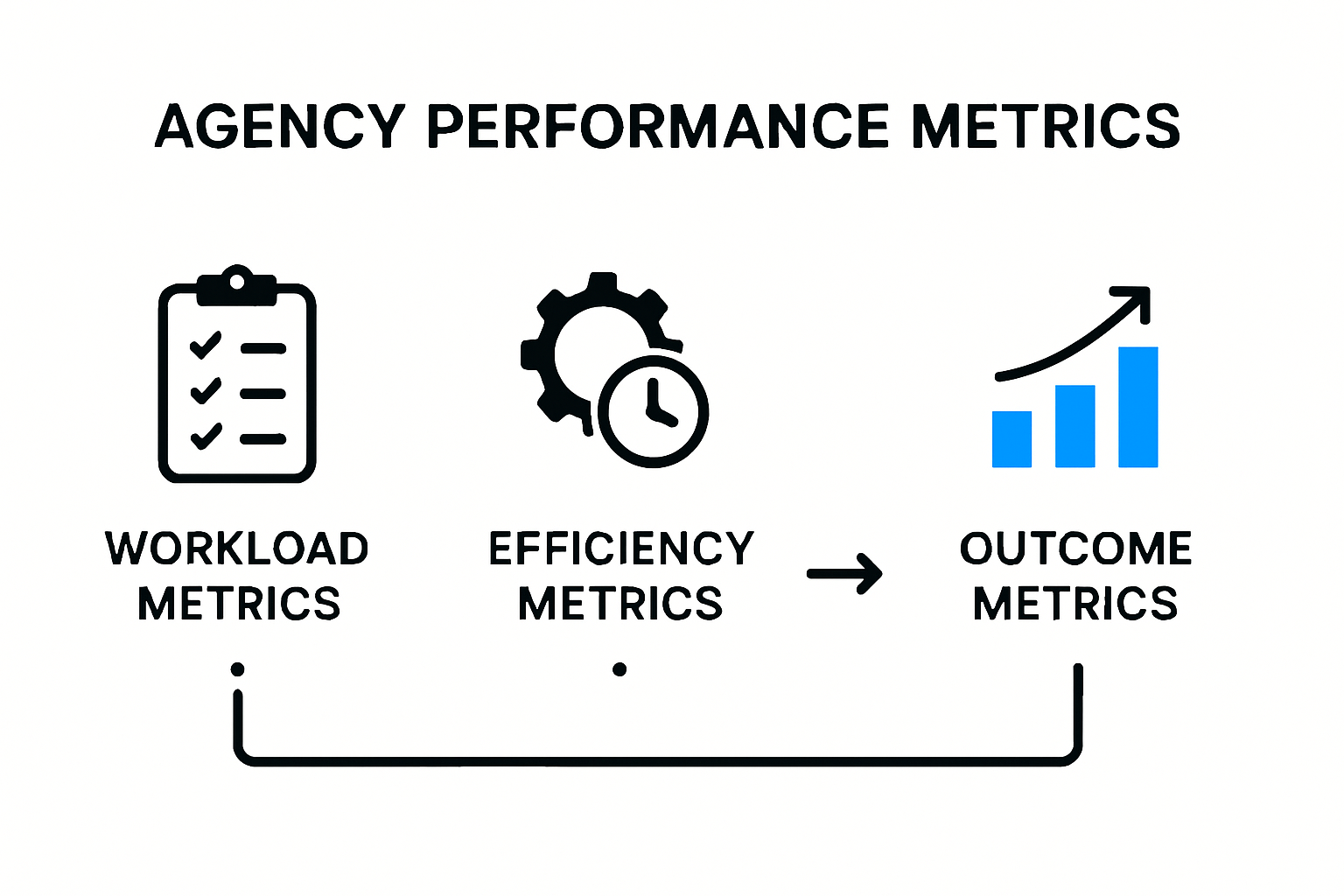
Agency performance metrics go beyond simple numerical tracking. They represent a comprehensive approach to understanding an organization’s strengths, weaknesses, and strategic opportunities. The Georgia Governor’s Office of Planning and Budget highlights three critical dimensions of performance measurement:
Here’s a summary table that outlines the three core components of agency performance measurement, making it easy to scan their focus and descriptions as discussed in this section.
| Metric Type | Focus | Description |
|---|---|---|
| Workload Metrics | Activity volume | Measure the volume of operational activities and program outputs |
| Efficiency Metrics | Resource utilization | Assess how effectively resources are used in service delivery |
| Outcome Metrics | Results achieved | Evaluate the actual impact and results achieved by the agency |
- Workload Metrics: Measure the volume of operational activities and program outputs
- Efficiency Metrics: Assess how effectively resources are used in service delivery
- Outcome Metrics: Evaluate the actual impact and results achieved by the agency
These dimensions provide a holistic view of agency performance, enabling leaders to make data-driven decisions and continuously improve organizational effectiveness.
Why Tracking Performance Metrics Matters
Agency performance metrics are not just numbers on a spreadsheet. They are strategic tools that reveal critical insights into organizational health. According to the Federal IT Dashboard, tracking comprehensive performance metrics allows agencies to analyze key aspects such as spending distribution, operational ratings, schedule variances, and cost effectiveness.
For agency owners, understanding these metrics means moving beyond intuition and gut feelings. By systematically tracking performance indicators, you can:
- Identify potential bottlenecks in service delivery
- Optimize resource allocation
- Make informed strategic decisions
- Demonstrate tangible value to stakeholders
Developing a Robust Performance Measurement Framework
Creating an effective performance measurement system requires more than just collecting data. It demands a strategic approach that aligns metrics with organizational goals. Learn more about operational excellence strategies that can help agencies develop comprehensive performance tracking mechanisms.
Successful agencies recognize that performance metrics are living, dynamic tools. They require continuous refinement, regular review, and a commitment to using data as a catalyst for improvement. By embracing a comprehensive approach to performance measurement, agencies can transform raw data into actionable insights that drive sustainable growth and operational excellence.
Essential Metrics to Track for Growth
Agency growth is not a passive process but an intentional strategy driven by precise measurement and strategic insight. Tracking the right performance metrics becomes the roadmap for sustainable expansion and operational excellence.
Revenue and Financial Performance Metrics
Financial metrics serve as the foundational indicators of agency health and potential growth. Performance.gov emphasizes the critical nature of tracking comprehensive financial benchmarks that go beyond simple revenue numbers.
Key financial metrics agencies should monitor include:
- Revenue Growth Rate: Measuring year-over-year revenue increase
- Profit Margin: Understanding actual earnings after expenses
- Client Acquisition Cost: Evaluating the investment required to gain new clients
- Monthly Recurring Revenue (MRR): Assessing predictable income streams
These metrics provide a clear picture of financial stability and potential scaling opportunities. By understanding these numbers, agency leaders can make informed decisions about resource allocation, investment strategies, and growth potential.
Operational Efficiency and Performance Indicators
Beyond financial metrics, agencies must track operational performance to ensure sustainable growth. Efficiency metrics reveal how effectively an organization utilizes its resources and delivers value to clients.
Critical operational metrics include:
- Project Completion Rate: Measuring the percentage of projects successfully finished on time
- Client Retention Rate: Tracking the percentage of clients who continue working with the agency
- Team Productivity: Analyzing output per team member or department
- Service Delivery Turnaround Time: Measuring the speed and quality of service delivery
Discover advanced strategies for operational excellence that can help transform these metrics into actionable growth strategies.
Client and Market Performance Metrics
Understanding client dynamics and market positioning is crucial for sustained agency growth. These metrics provide insights into customer satisfaction, market competitiveness, and potential expansion opportunities.
Essential client and market metrics include:
- Net Promoter Score (NPS): Measuring client loyalty and satisfaction
- Client Feedback and Satisfaction Ratings: Tracking qualitative and quantitative client experiences
- Market Share: Understanding the agency’s position within the competitive landscape
- New Client Acquisition Rate: Evaluating the agency’s ability to attract and onboard new business
By comprehensively tracking these metrics, agencies can develop a nuanced understanding of their performance, identify growth opportunities, and create targeted strategies for expansion. The key is not just collecting data but transforming those insights into actionable strategic plans that drive meaningful growth and competitive advantage.
To help you quickly compare key metrics for growth, the table below organizes the essential financial, operational, and client/market performance metrics that every agency should track, as discussed in this section.
| Metric Name | Category | What It Measures |
|---|---|---|
| Revenue Growth Rate | Financial | Year-over-year revenue increase |
| Profit Margin | Financial | Actual earnings after expenses |
| Client Acquisition Cost | Financial | Investment required to gain new clients |
| MRR (Monthly Recurring Revenue) | Financial | Predictable income streams |
| Project Completion Rate | Operational | Percentage of projects finished on time |
| Client Retention Rate | Operational | Percentage of clients retained |
| Net Promoter Score (NPS) | Client/Market | Level of client loyalty and satisfaction |
| Market Share | Client/Market | Agency’s position within the competitive landscape |

How to Analyze and Improve Your Metrics
Analyzing and improving agency performance metrics requires a strategic, systematic approach that transforms raw data into actionable insights. The process goes beyond simple number crunching and demands a comprehensive understanding of how different metrics interconnect and influence organizational performance.
Establishing a Robust Data Collection Framework
Effective metric analysis begins with creating a solid data collection infrastructure. This means implementing tools and processes that capture accurate, real-time information across multiple dimensions of agency performance. Key considerations include:
- Consistent Data Collection: Develop standardized methods for tracking metrics
- Integrated Reporting Systems: Use platforms that can aggregate data from multiple sources
- Regular Data Audits: Continuously validate the accuracy and reliability of collected information
- Automated Tracking Mechanisms: Leverage technology to reduce manual data entry errors
The goal is to create a data ecosystem that provides transparent, reliable insights into agency performance. Explore advanced operational strategies that can help streamline your data collection processes.
Advanced Analysis and Interpretation Techniques
Transforming raw data into meaningful insights requires sophisticated analysis techniques. Agencies must move beyond surface-level interpretations and develop a nuanced understanding of their performance metrics.
Critical analysis approaches include:
- Trend Analysis: Identifying long-term patterns and trajectories in performance data
- Comparative Benchmarking: Comparing internal metrics against industry standards
- Correlation Studies: Understanding how different metrics interact and influence each other
- Predictive Analytics: Using historical data to forecast future performance trends
By implementing these advanced analysis techniques, agencies can uncover hidden insights that drive strategic decision-making and continuous improvement.
Implementing Continuous Improvement Strategies
Analysis without action is meaningless. The true value of performance metrics lies in their ability to drive meaningful organizational change. Agencies must develop a culture of continuous improvement that responds dynamically to insights gained from metric analysis.
Key strategies for metric-driven improvement include:
- Regular Performance Reviews: Conduct systematic assessments of metric performance
- Targeted Intervention Plans: Develop specific strategies to address identified weaknesses
- Agile Performance Management: Create flexible systems that can quickly adapt to changing insights
- Performance Feedback Loops: Establish mechanisms for ongoing learning and refinement
Successful agencies view performance metrics as living, breathing tools for organizational growth. By adopting a holistic approach to analysis and improvement, agencies can transform data into a powerful catalyst for strategic development, operational excellence, and sustained competitive advantage.
Tools and Best Practices for Effective Tracking
Effective performance metric tracking requires a strategic approach that combines robust technological tools with well-designed organizational processes. Agencies must invest in systems that not only collect data but transform information into actionable insights.
Technology and Software Solutions
Modern agencies have access to sophisticated tracking tools that streamline performance measurement. According to research published in the NIH Healthcare journal, successful performance tracking depends on implementing standardized data collection protocols and comprehensive monitoring systems.
Key technological tools for effective metric tracking include:
- Performance Management Software: Platforms that aggregate and visualize complex performance data
- Business Intelligence Dashboards: Real-time analytics tools that provide comprehensive organizational insights
- Cloud-Based Reporting Systems: Scalable solutions that enable remote tracking and collaboration
- Automated Reporting Tools: Systems that generate consistent, reliable performance reports
These technologies enable agencies to move beyond manual tracking, providing sophisticated, real-time insights into organizational performance.
Establishing Tracking Best Practices
Technology alone cannot guarantee effective performance tracking. Agencies must develop robust frameworks and organizational practices that maximize the potential of their tracking tools.
Critical best practices include:
- Clear Metric Definitions: Establishing precise, measurable performance indicators
- Regular Data Validation: Implementing systematic processes to ensure data accuracy
- Cross-Departmental Alignment: Creating unified tracking approaches across different agency segments
- Continuous Training: Ensuring team members understand how to effectively use tracking tools
Learn more about operational excellence strategies that can help refine your agency’s performance tracking approach.
Creating a Culture of Metric-Driven Performance
Successful performance tracking transcends technological implementation. It requires building an organizational culture that values data-driven decision-making and continuous improvement.
Key cultural elements include:
- Transparent Reporting: Openly sharing performance metrics across the organization
- Performance Accountability: Establishing clear expectations linked to metric performance
- Continuous Learning: Using metric insights to drive ongoing skill development
- Adaptive Strategy: Remaining flexible and responsive to performance data
Agencies that integrate these technological tools, best practices, and cultural principles can transform performance tracking from a mundane administrative task into a powerful strategic advantage. By creating a holistic approach to metric tracking, organizations can unlock unprecedented levels of operational efficiency, strategic insight, and sustainable growth.
Frequently Asked Questions
What are agency performance metrics?
Agency performance metrics are quantifiable indicators that help agencies measure their operational health and effectiveness. They encompass aspects such as workload, efficiency, and outcomes, providing insights for strategic decision-making.
Why is it important to track performance metrics in an agency?
Tracking performance metrics is important because it allows agencies to identify bottlenecks, optimize resource allocation, and make informed strategic decisions that can lead to increased client retention and revenue growth.
Which financial performance metrics should agencies monitor?
Agencies should monitor key financial metrics such as revenue growth rate, profit margin, client acquisition cost, and monthly recurring revenue (MRR) to assess their financial stability and growth potential.
How can agencies create a culture of metric-driven performance?
Agencies can foster a culture of metric-driven performance by promoting transparent reporting, establishing performance accountability, encouraging continuous learning, and remaining adaptive to insights derived from metrics.
Ready to Turn Your Performance Metrics Into Real Agency Growth?
You have read how successful agencies track the right performance metrics to fuel growth and keep clients coming back. But too often, agencies struggle to move from collecting numbers to actually using insights for revenue growth, improved operations, and better team performance. If you are feeling stuck with data that does not translate into action, or if you want to turn those metrics into consistent wins, you are not alone. Trying to build processes for operational efficiency and strategic development can be overwhelming without expert support.

If you are serious about growth and want help building systems that drive your numbers in the right direction, now is the time to act. The team at Agency Firestarter specializes in helping digital marketing and consulting agency owners like you transform data-driven goals into proven results. Explore our personalized business growth coaching programs or schedule a free consultation today. Get expert guidance and take the next confident step toward measurable, sustainable agency success.
Recommended
- What Is Operational Excellence? 2025 Guide for Agencies – Business Coach For Digital Marketing Companies, SEO, Social Media Agencies
- The Future of Leadership Development: Trends to Watch in 2025 – Business Coach For Digital Marketing Companies, SEO, Social Media Agencies
- Digital Marketing Business Coach For Digital Marketing Agencies, SEO, Social Media
- Blog Archives – Business Coach For Digital Marketing Companies, SEO, Social Media Agencies
- A/B Test Result Reporting: How to Analyze and Present Data (2025)