

Understanding What Makes Great Leaders
Leadership gets talked about as the secret engine behind high-performing teams and organizations. But what if the big difference between good leaders and great ones comes down to something far less obvious than technical know-how or a fancy title? The real game shifts when you realize that organizations with strong leadership are 2.2 times more likely to outperform their competitors in revenue growth and efficiency. That means the subtle skills and emotional intelligence a leader brings might be the true power behind every standout success.
Table of Contents
- Defining Leadership And Its Importance
- Key Traits That Define Great Leaders
- The Role Of Emotional Intelligence In Leadership
- How Great Leaders Inspire And Motivate Others
- The Impact Of Leadership On Organizational Success
Quick Summary
| Takeaway | Explanation |
|---|---|
| Leadership is about connection, not control. | Great leaders inspire and empower their teams, fostering an environment of trust and collaboration. |
| Emotional intelligence enhances leadership effectiveness. | High emotional intelligence enables leaders to understand team dynamics, manage stress, and offer empathetic support. |
| Strategic decision-making is essential for effective leadership. | Leaders must blend analytical thinking with adaptability, anticipating challenges while guiding their teams. |
| Articulate a compelling vision to motivate teams. | Clear communication of a shared vision aligns individual goals with organizational objectives, enhancing engagement. |
| Leadership impacts overall organizational performance significantly. | Effective leadership drives employee satisfaction, operational efficiency, and sustainable growth within organizations. |
Defining Leadership and Its Importance
Leadership represents a complex human capability that transcends traditional management practices. It involves guiding, inspiring, and empowering individuals and teams toward achieving collective goals with vision and purpose. Understanding what makes great leaders requires examining the fundamental elements that distinguish exceptional leadership from mere positional authority.
The Core Essence of Leadership
At its fundamental level, leadership is about creating meaningful connections and driving positive change. Great leaders do not simply issue commands. They cultivate environments where team members feel motivated, understood, and capable of contributing their best work. According to Harvard Business Review, effective leadership combines emotional intelligence, strategic thinking, and the ability to inspire trust.
Key characteristics of exceptional leadership include:
- Demonstrated commitment to team growth and development
- Clear communication of organizational vision
- Ability to make decisive decisions under complex circumstances
- Genuine empathy and understanding of team dynamics
Strategic Impact of Strong Leadership
Leadership extends far beyond individual performance. It serves as a critical catalyst for organizational success. McKinsey & Company research indicates that organizations with robust leadership practices are 2.2 times more likely to outperform their competitors in revenue growth and operational efficiency.
While technical skills matter, what makes great leaders truly exceptional is their capacity to transform potential into tangible results. They create supportive frameworks that enable team members to excel, innovate, and overcome challenges. By understanding individual strengths and providing targeted support, these leaders build resilient, high-performing teams.
Leadership is not about perfection but about continuous learning, adaptation, and genuine commitment to collective success. [Learn more about developing leadership skills](https://agencyfirestarter.com/understanding-leadership-
To help readers understand the essential attributes that differentiate outstanding leaders, the following table summarizes the key traits and characteristics of great leadership as discussed in the article.
| Trait/Characteristic | Description |
|---|---|
| Commitment to Team Growth | Actively fosters development and learning opportunities for team members |
| Clear Vision Communication | Articulates organizational vision and goals with clarity |
| Decisiveness Under Complexity | Makes timely, confident decisions in challenging or ambiguous situations |
| Genuine Empathy | Understands and responds to the needs and emotions of others |
| High Emotional Intelligence | Manages personal emotions and perceives/responds to team emotions effectively |
| Strategic Decision-Making | Balances data-driven analysis with adaptability and intuition |
| Adaptability | Responds flexibly to changing circumstances and new challenges |
vs-management) that can transform your agency’s performance and culture.
Key Traits That Define Great Leaders
Great leadership is not a predetermined genetic trait but a complex combination of skills, behaviors, and mindsets that can be developed and refined over time. Understanding what makes great leaders requires examining the intricate psychological and behavioral characteristics that distinguish exceptional leaders from average managers.
Emotional Intelligence and Self-Awareness
Emotional intelligence stands at the core of transformative leadership. Leaders who demonstrate high emotional intelligence can understand and manage their own emotions while effectively navigating the emotional landscapes of their teams. According to Minnesota Department of Employment and Economic Development, key leadership traits include social boldness, self-assurance, empathy, and charisma.
Critical components of emotional intelligence for leaders include:
- Recognizing personal emotional triggers
- Managing stress and maintaining composure under pressure
- Reading and responding to team members’ emotional states
- Providing constructive and empathetic feedback
Strategic Decision Making and Adaptability
Effective leaders possess a unique ability to make strategic decisions while remaining flexible in dynamic environments. This trait goes beyond technical expertise and requires a nuanced understanding of complex systems, potential outcomes, and organizational dynamics. They do not merely react to circumstances but anticipate and shape potential scenarios.
The hallmark of great leadership is the capacity to blend analytical thinking with intuitive understanding. Leaders must simultaneously process data-driven insights and leverage their accumulated experience to make informed decisions. This balanced approach allows them to guide their teams through uncertainty with confidence and clarity.
Explore advanced leadership communication strategies that can elevate your ability to inspire and influence. Developing these key traits requires continuous learning, self-reflection, and a genuine commitment to personal and professional growth.
The Role of Emotional Intelligence in Leadership
Emotional intelligence represents a transformative skill set that elevates leadership from transactional management to inspirational guidance. Unlike traditional leadership models that prioritize technical competence, emotional intelligence focuses on understanding and navigating complex human interactions with empathy, self-awareness, and strategic interpersonal dynamics.
Understanding Emotional Intelligence Framework
Emotional intelligence encompasses the ability to recognize, understand, and effectively manage emotions in oneself and others. According to National Institutes of Health research, leaders with high emotional intelligence demonstrate significantly better organizational outcomes, including enhanced employee satisfaction and commitment.
Core components of emotional intelligence include:
- Self-awareness of personal emotional responses
- Capacity to regulate personal emotional states
- Empathetic understanding of team members’ perspectives
- Effective emotional communication and conflict resolution
Strategic Impact on Organizational Performance
Leaders who master emotional intelligence transform workplace dynamics by creating psychologically safe environments where team members feel valued, understood, and motivated. They move beyond traditional command structures to build genuine connections that inspire discretionary effort and loyalty.
The most effective leaders use emotional intelligence as a strategic tool for understanding unspoken team dynamics, anticipating potential conflicts, and creating collaborative frameworks that maximize collective potential. By demonstrating genuine empathy and self-regulation, they build trust that transcends hierarchical boundaries.
Discover advanced soft skills for agency leadership that can revolutionize your team’s performance and organizational culture. Developing emotional intelligence is not a destination but a continuous journey of personal and professional growth.
This table presents an overview of core components of emotional intelligence in leadership, detailing each element and its strategic impact within organizations as described in the article.
| Emotional Intelligence Component | Description | Strategic Organizational Impact |
|---|---|---|
| Self-Awareness | Recognizing and understanding one’s own emotions | Enhances decision-making and self-regulation |
| Self-Regulation | Managing and controlling emotional responses | Promotes composure and trust during stressful or complex situations |
| Empathy | Understanding and relating to others’ perspectives | Builds stronger relationships and promotes team cohesion |
| Emotional Communication | Effectively expressing emotions and resolving conflict | Reduces misunderstandings and fosters a positive, collaborative environment |
| Social Awareness | Perceiving group dynamics and team emotional states | Supports effective leadership of complex teams and alignment with objectives |

How Great Leaders Inspire and Motivate Others
Inspirational leadership transcends traditional management approaches by creating profound psychological connections that motivate team members to exceed their perceived limitations. Great leaders understand that motivation is not about external pressure but about cultivating an internal drive that emerges from genuine engagement, shared purpose, and meaningful contribution.
Crafting a Compelling Organizational Vision
The foundation of inspirational leadership lies in articulating a vision that resonates deeply with individual team members. According to National Institutes of Health research, transformational leaders who provide intellectual stimulation and express individualized consideration consistently enhance motivation and performance.
Key strategies for vision communication include:
- Connecting organizational goals to personal growth opportunities
- Demonstrating genuine passion and commitment
- Translating abstract objectives into tangible, meaningful outcomes
- Creating narrative frameworks that invite personal investment
Psychological Mechanisms of Motivation
Motivation is a complex interplay of intrinsic and extrinsic factors. Great leaders recognize that sustainable motivation stems from understanding individual team members’ unique aspirations, strengths, and potential. They create environments where people feel valued not just for their output, but for their inherent human potential.
Effective leaders use strategic recognition as a powerful motivational tool. This goes beyond formal reward systems, focusing instead on personalized acknowledgment that validates individual contributions and reinforces a sense of meaningful participation. By consistently demonstrating that each team member’s work matters, they transform professional relationships into collaborative partnerships.
Master the art of leadership communication to unlock your team’s full motivational potential. True inspiration emerges when leaders bridge the gap between organizational objectives and individual human aspirations.
The Impact of Leadership on Organizational Success
Leadership is the critical catalyst that transforms organizational potential into tangible performance. Far beyond managing daily operations, exceptional leadership creates systemic conditions that enable teams to achieve extraordinary results, driving innovation, adaptability, and sustainable growth across complex business environments.
Measuring Leadership’s Organizational Influence
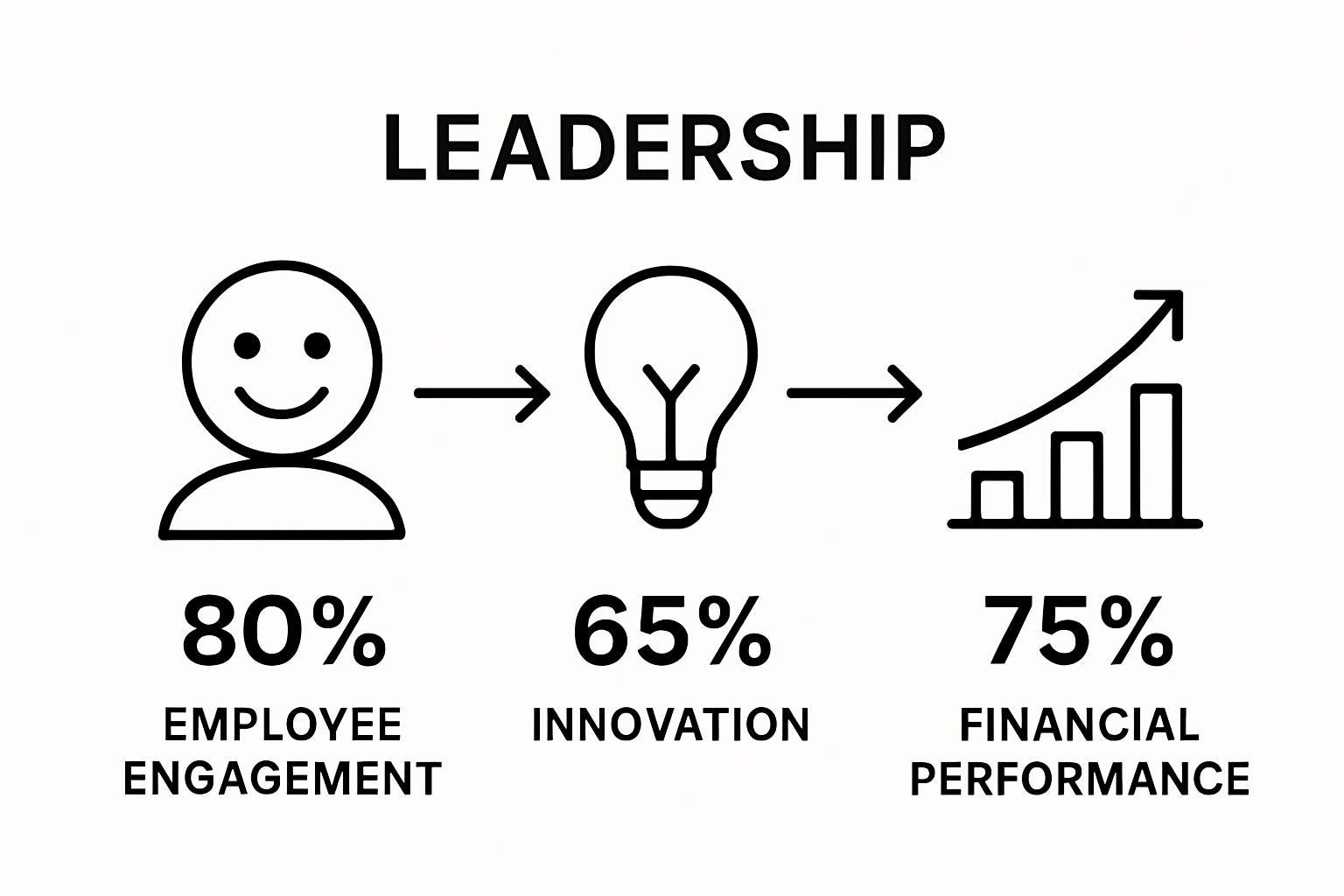
The quantitative and qualitative impact of leadership extends across multiple organizational dimensions. According to National Institutes of Health research, effective leadership significantly influences staff satisfaction, organizational commitment, and overall performance metrics.
Critical organizational performance indicators influenced by leadership include:
- Employee engagement and retention rates
- Operational efficiency and productivity
- Innovation and strategic adaptation capabilities
- Financial performance and sustainable growth
Strategic Alignment and Cultural Transformation
Exceptional leaders understand that organizational success is not achieved through hierarchical directives but through creating aligned and empowered ecosystems. They bridge strategic objectives with individual team member motivations, transforming potential disconnects into collaborative opportunities.
This alignment requires leaders to consistently demonstrate a holistic understanding of organizational dynamics. By fostering transparent communication, encouraging calculated risk-taking, and creating psychological safety, leaders build resilient cultures that can navigate complex challenges with agility and commitment.
Explore comprehensive leadership coaching strategies that can fundamentally reshape your organization’s performance trajectory. Great leadership is not about controlling outcomes but about creating environments where collective potential can flourish.
Unlock Your Leadership Potential with Expert Guidance
Are you grappling with the challenges of growing a high-performing team, struggling to motivate others, or aiming to bridge the gap between strong management and truly transformative leadership? As highlighted in “Understanding What Makes Great Leaders,” emotional intelligence, clear vision, and strategic adaptability are the modern agency owner’s biggest assets. Yet, many leaders find it difficult to develop these key traits while also running and scaling their business. The cost of missed opportunities and disengaged teams can be overwhelming if action is not taken.

Do not let uncertainty hold your agency back. Start building your leadership edge today by working with proven experts who know how to turn agency owners into inspiring leaders. Visit Agency Firestarter to learn how our tailored leadership development solutions and actionable coaching strategies can empower you and your team. Secure your breakthrough now and schedule a free consultation to take the first step toward agency success.
Frequently Asked Questions
What are the core characteristics of great leaders?
Great leaders typically exhibit commitment to team growth, clear communication of their vision, decisiveness in complex situations, and genuine empathy toward their team members.
How does emotional intelligence influence leadership?
Emotional intelligence allows leaders to understand their own emotions and navigate the emotional landscapes of their teams, leading to better communication, conflict resolution, and overall employee satisfaction.
Why is strategic decision-making important in leadership?
Strategic decision-making is crucial as it enables leaders to balance analytical insights with intuitive understanding, allowing them to navigate dynamic environments with confidence and clarity while guiding their teams effectively.
How do great leaders inspire motivation in their teams?
Great leaders inspire motivation by articulating a compelling vision, recognizing individual team members’ contributions, and creating an environment that fosters personal growth and meaningful engagement.